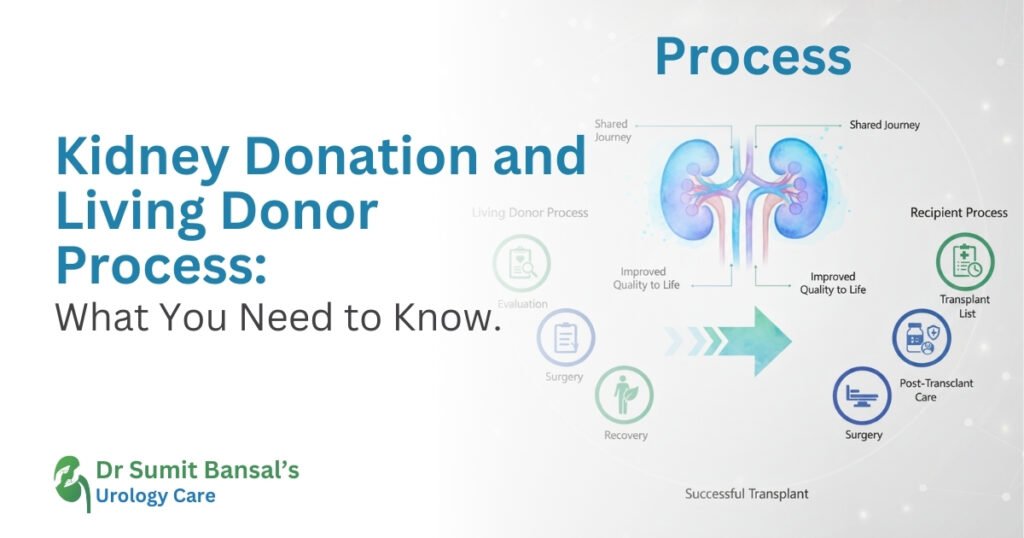

Kidney transplantation is an important treatment option for people with advanced kidney failure. It involves placing a healthy kidney from a donor into the recipient’s body to help perform essential functions, including filtering waste products and maintaining fluid and electrolyte balance.
One of the most common questions patients and their families ask is: Should we consider a living donor kidney transplant or wait for a deceased donor kidney transplant? Both options can offer an opportunity for a better quality of life. However, they differ in donor availability, waiting time, surgical planning, and certain medical considerations. Understanding these differences can help patients make informed decisions with their transplant team. In this blog, Dr. Sumit Bansal explains the differences between living donor and deceased donor kidney transplantation, including their benefits, limitations, and the factors that influence the choice of treatment.What Is a Living Donor Kidney Transplant?
A living donor kidney transplant is a procedure in which a healthy person donates one of their kidneys to someone with kidney failure. A person can generally live a healthy life with one functioning kidney, provided they meet the medical criteria for donation and receive appropriate follow-up care.
In India, living donors may include eligible relatives and certain unrelated donors, subject to applicable legal requirements and authorization procedures.
Before transplantation, both the donor and recipient undergo detailed medical evaluations. These may include blood group testing, tissue compatibility testing, cross-matching, kidney function assessment, and screening for other medical conditions.
Benefits of a Living Donor Kidney Transplant
1. Potentially shorter waiting time
If a suitable living donor is identified and both individuals receive medical and legal clearance, the transplant can often be planned in advance. This may reduce the time spent waiting for a suitable organ.
2. Better opportunity for planned surgery
The transplant team can coordinate the procedure around the donor’s and recipient’s medical readiness. Planned surgery also allows families to prepare for hospital admission and recovery.
3. Potentially better long-term outcomes
Living donor kidneys often have favourable outcomes because the transplant can be planned, and the kidney typically experiences less time without a blood supply before transplantation. However, individual outcomes vary according to donor and recipient health, compatibility, and other clinical factors.
4. Possibility of transplantation before dialysis
For suitable patients, a living donor transplant may be possible before dialysis becomes necessary. This is known as a pre-emptive kidney transplant and may be considered when clinically appropriate.
Limitations of a Living Donor Kidney Transplant
The donor must undergo surgery, which carries risks such as bleeding, infection, blood clots, and other complications.
The donor must be medically fit and willing to donate voluntarily.
Compatibility issues may require further evaluation or consideration of an approved paired-donation programme, where available.
The transplant cannot proceed until all required medical, ethical, and legal approvals are completed.
The donor’s health and informed consent must remain a priority throughout the process.
What Is a Deceased Donor Kidney Transplant?
A deceased donor kidney transplant involves transplanting a kidney donated by a person who has died and whose organs can legally and medically be retrieved for transplantation.
After the appropriate medical and legal procedures, the donated kidney is allocated to a suitable recipient through the authorized organ allocation system.
In India, the National Organ and Tissue Transplant Organization (NOTTO) and the relevant regional and state authorities play important roles in the organ donation and allocation framework.
Patients who do not have a suitable living donor may be evaluated and registered on the deceased donor transplant waiting list through an authorized transplant centre.
Benefits of a Deceased Donor Kidney Transplant
1. An option for patients without a living donor
Patients who do not have an eligible or willing living donor may still have the opportunity to receive a kidney transplant through the deceased donor programme.
2. No planned kidney removal surgery for a living donor
There is no living donor undergoing kidney removal for the recipient’s transplant. This is an important consideration for patients who are concerned about the risks to a family member or friend.
3. Access through an organized donation programme
The kidney is allocated according to applicable medical, compatibility, and allocation criteria. This provides a structured route to transplantation for eligible patients.
Limitations of a Deceased Donor Kidney Transplant
Waiting times can be unpredictable and may be prolonged because the availability of donated kidneys is limited.
The recipient must remain medically suitable for transplantation while waiting.
Once a kidney becomes available, the recipient may need to reach the hospital promptly for assessment and surgery.
The condition of the donated kidney and the time it spends outside the body can affect how quickly it begins functioning.
A deceased donor transplant can still be successful and may be the most appropriate option for many patients.
Living Donor vs. Deceased Donor Kidney Transplant: Key Differences
| Factor | Living Donor Transplant | Deceased Donor Transplant |
|---|---|---|
| Source of kidney | An eligible living person | A medically suitable deceased donor |
| Waiting time | Often shorter if a donor is approved | Depends on organ availability and allocation |
| Surgery planning | Usually planned in advance | Depends on when a suitable kidney becomes available |
| Donor surgery | A living donor undergoes kidney removal | No living donor undergoes kidney removal for the recipient |
| Kidney function after surgery | Often starts functioning promptly | May start promptly or take longer |
| Compatibility | Assessed before planned surgery | Assessed when a donor kidney becomes available |
| Long-term outcomes | Often favourable | Can also provide excellent outcomes |
| Availability | Depends on an eligible and willing donor | Depends on donated organs and allocation |
Note: These are general comparisons. Individual results depend on the donor kidney, the recipient’s medical condition, compatibility, and the quality of transplant care.
Which Kidney Transplant Has Better Success Rates?
Living donor kidney transplants generally have favourable graft and patient outcomes, and the transplanted kidney often begins functioning sooner. Nevertheless, it would be incorrect to assume that every living donor transplant will be more successful than every deceased donor transplant.
The outcome of a kidney transplant depends on several factors, including:
The age and health of the donor.
The recipient’s overall health and other medical conditions.
Blood group compatibility and immunological testing.
The quality and condition of the donated kidney.
The recipient’s adherence to prescribed medicines.
Regular follow-up, infection prevention, and monitoring for rejection.
Both living donor and deceased donor kidney transplants can provide substantial benefits for appropriately selected patients.
What Happens Before a Kidney Transplant?
Regardless of the donor type, kidney transplantation requires careful assessment and preparation.
1. Recipient evaluation
The transplant team evaluates kidney failure, cardiovascular health, infections, other medical conditions, and the recipient’s ability to undergo surgery and follow the treatment plan.
2. Donor assessment and compatibility testing
For living donor transplantation, the donor undergoes a thorough evaluation to establish medical suitability and ensure that donation can be performed safely. For deceased donor transplantation, the available kidney is assessed and matched with potential recipients.
3. Legal and ethical clearance
In India, organ transplantation must follow applicable laws, authorization requirements, and procedures designed to prevent coercion and illegal organ trade.
4. Transplant surgery
During the procedure, the surgeon generally places the donated kidney in the lower abdomen and connects its blood vessels and ureter. The recipient’s original kidneys usually remain in place unless there is a medical reason to remove them.
5. Recovery and long-term monitoring
After surgery, the recipient is monitored closely for kidney function, infection, rejection, and other complications. Most recipients require lifelong immunosuppressive medicines to reduce the risk of rejection.
Life After a Kidney Transplant
A successful transplant may improve energy levels, daily functioning, and quality of life. Many recipients also experience greater flexibility in their diet and daily routine compared with dialysis, although individual restrictions may still apply.
To protect the transplanted kidney, patients should:
Take all prescribed medicines exactly as directed.
Attend scheduled follow-up appointments and blood tests.
Follow medical advice on diet, exercise, and fluid intake.
Maintain good hygiene and take appropriate precautions against infection.
Monitor blood pressure, blood sugar, and weight as advised.
Contact their transplant team promptly if they develop a fever, reduced urine output, unusual swelling, or other concerning symptoms.
A transplant is a treatment for kidney failure, not a permanent cure. Continued medical care is essential to support the health of the transplanted kidney.
Can a Kidney Transplant Be Done Without Dialysis?
Yes, in selected patients. A transplant performed before dialysis begins is called a pre-emptive kidney transplant.
This may be considered when kidney function has declined significantly, transplantation is medically appropriate, and a suitable donor kidney is available. Early consultation with a nephrologist and transplant team can help patients understand their options and plan treatment at the appropriate time.
Patients should not delay specialist evaluation while waiting for symptoms to become severe.
Frequently Asked Questions
1. Is a living donor kidney transplant always better?
Not necessarily. Living donor transplantation often offers advantages in planning and may provide favourable outcomes, but the best option depends on the patient’s medical condition, donor suitability, compatibility, and other clinical factors.
2. How long does it take to receive a deceased donor kidney in India?
There is no fixed waiting period. It depends on factors such as blood group, compatibility, allocation criteria, organ availability, and the transplant programme. Patients should remain in contact with their authorized transplant centre while waiting.
3. Can a family member donate a kidney?
An eligible family member may be able to donate after comprehensive medical assessment and the required legal authorization. Being related does not automatically guarantee compatibility or eligibility.
4. Can someone live normally with one kidney after donating?
Many carefully selected living kidney donors lead healthy lives with one kidney. However, donation is a major medical decision, and potential donors need a thorough evaluation and long-term follow-up.
5. Will I need medicines after a kidney transplant?
Yes. Most recipients need lifelong immunosuppressive medication to reduce the risk of rejection, along with regular monitoring and other medicines when indicated.
6. What if I do not have a living donor?
You may be evaluated for registration on a deceased donor waiting list through an authorized transplant centre. Your specialist can explain eligibility, registration, allocation, and the treatment options available while you wait.
Conclusion
Both living donor and deceased donor kidney transplantation can offer patients with advanced kidney failure an opportunity for improved health and quality of life. Living donor transplantation may allow better planning and potentially reduce waiting time, while deceased donor transplantation provides an important option for patients who do not have a suitable living donor.
The right choice depends on individual medical needs, donor availability, compatibility, and a comprehensive evaluation by the transplant team.
If you or a family member has advanced kidney disease, consult a qualified kidney specialist to understand whether transplantation is appropriate and which options may be suitable for your situation.
Consult Dr. Sumit Bansal for guidance on urological health and kidney-related concerns. Early evaluation and informed decisions can help patients navigate their treatment journey with greater confidence.
References
National Institute of Diabetes and Digestive and Kidney Diseases (NIDDK): Kidney Transplant — https://www.niddk.nih.gov/health-information/kidney-disease/kidney-failure/kidney-transplant
National Organ and Tissue Transplant Organization (NOTTO), Government of India — https://notto.mohfw.gov.in/