
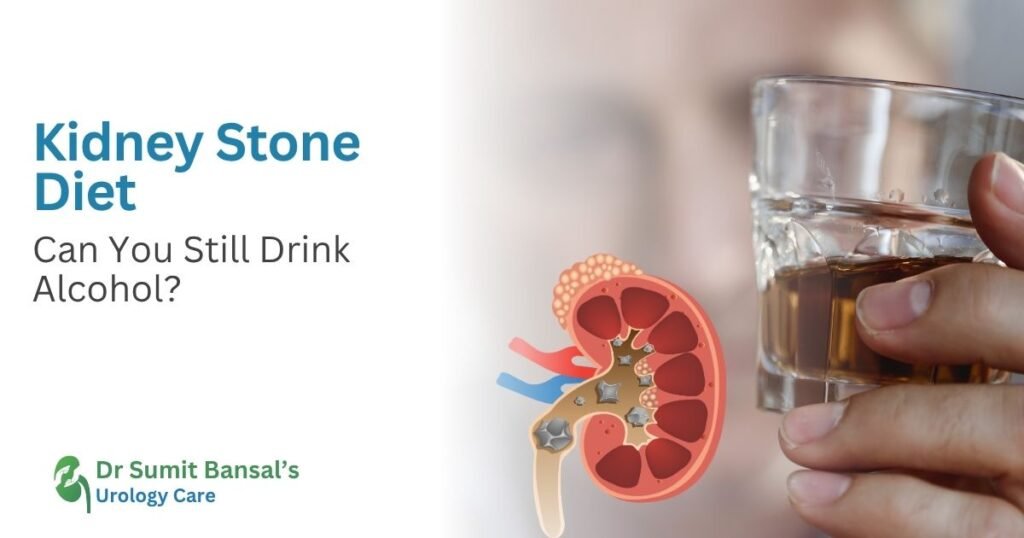
If you have had a kidney stone, you may have been told to drink more fluids and make changes to your diet. But one common question remains: Can you still drink alcohol if you have kidney stones?
The answer is not simply yes or no. Alcohol itself is not a treatment for kidney stones, and drinking it specifically to “flush out” stones is not recommended. Your individual risk also depends on the type of kidney stone you have, how much alcohol you consume, your hydration status and your overall health.
In this blog, Dr. Sumit Bansal explains how alcohol can affect kidney stone risk and what you should know about alcohol when following a kidney stone diet.
Does Alcohol Cause Kidney Stones?
Alcohol does not directly cause every type of kidney stone. However, excessive alcohol consumption can contribute to factors that may increase stone risk.
One important concern is hydration. Alcohol can increase urine production, and if you do not replace lost fluids, you may become dehydrated. More concentrated urine can make it easier for certain stone-forming substances to crystallize.
Therefore, if you have a history of kidney stones, maintaining adequate hydration is much more important than choosing a particular alcoholic beverage.
Can You Drink Alcohol If You Have Kidney Stones?
If you have kidney stones, occasional alcohol consumption may not automatically mean that you will develop another stone. However, alcohol should be consumed in moderation and should not replace water or other healthy fluids.
If you are currently experiencing severe stone pain, vomiting, dehydration, urinary obstruction or an infection, drinking alcohol is not appropriate. You should seek medical advice instead.
People with recurrent kidney stones may also need individualized dietary advice depending on their stone composition and urine chemistry.
What About Beer and Kidney Stones?
Beer is sometimes promoted as a way to prevent or flush out kidney stones because it contains a significant amount of water and may increase urine production.
However, this does not make beer a recommended kidney stone treatment.
The increase in urine production associated with alcohol should not be confused with healthy hydration. Drinking beer specifically to prevent or pass a kidney stone can also encourage alcohol consumption and may contribute to dehydration.
Water remains the preferred fluid for kidney stone prevention.
What About Wine?
Wine is also sometimes discussed in relation to kidney stone risk. Some observational studies have reported associations between moderate alcohol consumption and a lower risk of certain kidney stones.
However, an association does not prove that wine prevents kidney stones.
You should not start drinking wine as a strategy for stone prevention. If you already drink alcohol, moderation and adequate hydration are more sensible considerations.
What About Hard Liquor?
Spirits such as whisky, vodka, rum and other distilled alcoholic beverages contain considerably less water per serving than beer or other diluted drinks.
Heavy consumption can contribute to dehydration and other health problems.
If you have kidney stones, there is no evidence-based reason to choose spirits as a method of preventing or treating stones.
Alcohol and Uric Acid Kidney Stones
The relationship between alcohol and uric acid stones deserves particular attention.
Alcohol consumption can affect uric acid metabolism, and certain alcoholic beverages may contribute to increased uric acid levels. People who are prone to uric acid stones may therefore need to be particularly careful about alcohol intake.
If you have previously passed a uric acid stone or have high uric acid levels, your urologist may recommend specific dietary and lifestyle changes.
What Should You Drink Instead?
1. Water
Water is the most important beverage for kidney stone prevention.
Adequate fluid intake helps dilute urine and reduces the concentration of substances that can form crystals.
Your required fluid intake depends on your body size, activity level, climate, diet and medical conditions.
2. Citrus-Based Drinks
For some people prone to calcium stones, citrus beverages may be helpful because citrate can inhibit certain types of stone formation.
However, sugary drinks should not become the main source of fluids. Discuss your dietary needs with your doctor if you have recurrent stones.
3. Other Non-Alcoholic Fluids
Water and other suitable non-alcoholic beverages can contribute to overall fluid intake. The key goal is to maintain adequate hydration throughout the day.
Kidney Stone Diet: Foods to Focus On
Alcohol is only one part of your overall diet. If you have a history of kidney stones, several dietary habits may help reduce recurrence.
Reduce Excess Salt
High sodium intake can increase calcium excretion in urine and may contribute to calcium stone formation.
Try to limit:
- Packaged snacks
- Pickles and salty foods
- Processed meats
- Instant foods
- Excessive table salt
Maintain Appropriate Dietary Calcium
Do not automatically eliminate calcium from your diet.
For many people with calcium oxalate stones, an appropriate amount of dietary calcium can help bind oxalate in the gut and reduce its absorption.
Your doctor or dietitian can advise you about the appropriate amount for your individual situation.
Moderate High-Oxalate Foods When Appropriate
Foods such as spinach, certain nuts and some other plant foods contain higher amounts of oxalate.
However, avoiding all oxalate-containing foods is not necessary for everyone. Recommendations should depend on your stone type and individual risk factors.
Avoid Excessive Added Sugar
A diet high in added sugars may increase the risk of kidney stones in some individuals. Limiting sugary foods and drinks is therefore a useful part of a healthy diet.
Can Alcohol Affect Kidney Function?
For most healthy adults, occasional moderate alcohol consumption is different from heavy or chronic alcohol use.
Excessive alcohol consumption can contribute to dehydration and other health problems that may indirectly affect kidney health.
If you have kidney disease, recurrent kidney stones, high blood pressure, diabetes or other medical conditions, your doctor may recommend more specific limits or avoiding alcohol altogether.
What If You Already Have a Kidney Stone?
Dietary changes alone may not be enough to treat an existing stone.
Treatment depends on:
- Stone size
- Stone location
- Degree of urinary obstruction
- Symptoms
- Presence of infection
- Kidney function
- Previous stone history
Small stones may pass naturally in some patients, while larger or obstructing stones may require medical or surgical treatment.
A urologist can determine the most appropriate approach after evaluation.
When Should You Seek Urgent Medical Attention?
A kidney stone requires prompt medical assessment if you develop:
- Severe or persistent pain
- Fever or chills
- Difficulty passing urine
- Inability to urinate
- Persistent vomiting
- Blood in the urine with worsening symptoms
- Severe weakness or dehydration
A blocked urinary tract associated with infection can become a serious medical emergency.
Frequently Asked Questions
Can I drink beer if I have kidney stones?
Beer is not recommended as a treatment for kidney stones. If you choose to drink alcohol, moderation and adequate hydration are important, but water should remain your primary fluid.
Is alcohol bad for kidney stones?
Excessive alcohol can contribute to dehydration and may affect factors involved in stone formation. The impact also depends on the type of stone and your individual health.
Which alcohol is best for kidney stones?
There is no alcoholic beverage that can be recommended specifically for preventing kidney stones. Choosing water and maintaining adequate hydration is a much better strategy.
Can alcohol help pass a kidney stone?
No. Alcohol should not be used to try to force a kidney stone to pass. The appropriate management depends on the stone’s size, location and whether it is causing obstruction or other complications.
How much water should I drink to prevent kidney stones?
Fluid requirements vary between individuals. People prone to kidney stones are generally advised to maintain enough fluid intake to produce a high volume of dilute urine. Your urologist can provide personalized guidance, particularly if you have another condition that affects fluid intake.
Can diet prevent kidney stones from coming back?
Yes, dietary and lifestyle changes can reduce the risk of recurrence for many patients. The best plan depends on the type of stone and, in recurrent cases, may be guided by urine testing and stone analysis.
Conclusion
Having kidney stones does not necessarily mean you can never drink alcohol again. However, alcohol should not be used to prevent, flush out or treat kidney stones.
If you drink alcohol, moderation and adequate hydration are important. For people with recurrent stones, the most effective prevention strategy is usually based on adequate fluid intake, appropriate dietary changes and identifying the type and cause of the stones.
If you frequently develop kidney stones or are unsure which foods and drinks are suitable for you, consult a urologist for an individualized prevention plan.
Dr. Sumit Bansal can evaluate kidney stones, recurrent stone formation and other urinary conditions and recommend appropriate treatment and preventive measures.