
As men age, many begin to notice changes in their urinary habits. Frequent trips to the bathroom, difficulty starting urination, or waking up multiple times at night to urinate are often dismissed as a normal part of growing older. However, these symptoms could be caused by Benign Prostatic Hyperplasia (BPH), commonly known as an enlarged prostate.
BPH is one of the most common urological conditions affecting men over the age of 50. Although it is not cancerous and does not increase the risk of prostate cancer, it can significantly affect quality of life if left untreated.
The good news is that modern medicine offers a wide range of effective treatments—from lifestyle changes and medications to minimally invasive procedures and advanced surgeries.
What Is an Enlarged Prostate (BPH)?
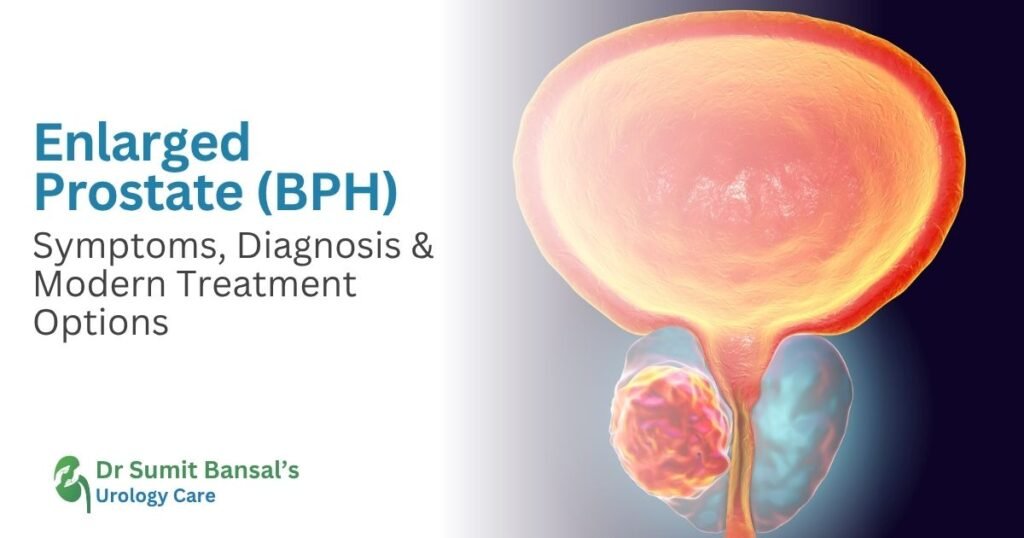
The prostate is a small, walnut-sized gland located just below the bladder and in front of the rectum. It surrounds the urethra, the tube that carries urine out of the body. The prostate plays an important role in producing fluid that nourishes and transports sperm.
As men grow older, the prostate naturally tends to enlarge. When this enlargement is non-cancerous, it is called Benign Prostatic Hyperplasia (BPH).
As the gland grows, it can press against the urethra, making it difficult for urine to flow freely. This pressure leads to a variety of urinary symptoms that can gradually worsen over time.
What Causes an Enlarged Prostate?
The exact cause of BPH is not completely understood, but several factors contribute to its development.
Ageing
The strongest risk factor is growing older. Hormonal changes occurring with age stimulate prostate growth.
Hormonal Changes
Changes in testosterone and dihydrotestosterone (DHT) levels influence prostate enlargement.
Family History
Men with a family history of BPH are more likely to develop the condition.
Lifestyle Factors
Certain habits may increase the likelihood of BPH, including:
- Obesity
- Physical inactivity
- Poor dietary habits
- Diabetes
- Heart disease
Maintaining a healthy lifestyle may help reduce symptom severity.
Symptoms of Enlarged Prostate (BPH)
Symptoms often develop gradually and become more noticeable over time.
Common signs include:
Frequent Urination
The need to urinate more often, especially during the day.
Nocturia
Waking up several times during the night to urinate.
Difficulty Starting Urination
Feeling the urge to urinate but struggling to begin the flow.
Weak Urine Stream
Reduced force of the urine stream compared to earlier years.
Interrupted Flow
Urine starts and stops multiple times during urination.
Dribbling After Urination
Persistent leakage even after finishing.
Feeling That the Bladder Isn’t Empty
Many men continue to feel the need to urinate immediately after finishing.
Sudden Urgency
A strong, difficult-to-control urge to urinate.
When Should You See a Urologist?
Consult a urologist if you experience:
- Frequent nighttime urination
- Difficulty passing urine
- Blood in urine
- Pain during urination
- Recurrent urinary tract infections
- Inability to urinate (a medical emergency)
- Worsening urinary symptoms that interfere with daily life
Early evaluation can prevent complications and improve treatment outcomes.
How Is Enlarged Prostate Diagnosed?
Your urologist will assess your symptoms and may recommend several tests.
Medical History
A detailed discussion about urinary symptoms, medications, and overall health.
Physical Examination
A Digital Rectal Examination (DRE) helps assess the size and texture of the prostate.
Urine Test
Checks for infection, blood, or other urinary abnormalities.
Blood Test (PSA)
A Prostate-Specific Antigen (PSA) test helps evaluate prostate health. While elevated PSA does not necessarily indicate prostate cancer, it helps guide further investigation when needed.
Ultrasound
Ultrasound imaging evaluates the prostate, bladder, and kidneys.
Uroflowmetry
Measures the speed and strength of urine flow.
Post-Void Residual (PVR) Test
Determines how much urine remains in the bladder after urination.
Cystoscopy
In selected cases, a small camera is inserted through the urethra to examine the urinary tract and prostate.
Can BPH Lead to Complications?
Untreated BPH may result in:
- Acute urinary retention (sudden inability to urinate)
- Recurrent urinary tract infections
- Bladder stones
- Blood in urine
- Bladder damage
- Kidney damage due to prolonged urinary obstruction
Timely treatment greatly reduces the risk of these complications.
Modern Treatment Options for Enlarged Prostate
Treatment depends on symptom severity, prostate size, age, and overall health.
1. Watchful Waiting
For men with mild symptoms, regular monitoring and lifestyle modifications may be sufficient.
Lifestyle changes include:
- Reducing caffeine and alcohol
- Limiting fluids before bedtime
- Maintaining a healthy weight
- Regular exercise
- Avoiding delayed urination
2. Medications
Medications are often the first line of treatment for moderate symptoms.
Common options include:
Alpha-Blockers
These medications relax the muscles around the prostate and bladder neck, making urination easier.
5-Alpha Reductase Inhibitors
These help shrink the prostate over time by reducing hormone-related prostate growth.
Combination Therapy
Some patients benefit from using both medication types together for improved symptom control.
3. Minimally Invasive Treatments
Advances in urology have introduced procedures that offer effective symptom relief with shorter recovery times.
Depending on the patient’s condition, options may include:
- Laser prostate surgery
- Water vapor therapy (Rezūm)
- Prostatic urethral lift (UroLift)
- Aquablation therapy
- Prostate artery embolization (in selected cases)
These procedures typically involve less bleeding, shorter hospital stays, and quicker recovery compared with traditional surgery.
4. Surgical Treatment
Surgery may be recommended for severe symptoms, very large prostates, or complications such as urinary retention.
Common surgical procedures include:
TURP (Transurethral Resection of the Prostate)
Often considered the gold standard for treating moderate to severe BPH, TURP removes excess prostate tissue through the urethra without external incisions.
Laser Enucleation Procedures
Techniques such as Holmium Laser Enucleation of the Prostate (HoLEP) remove obstructing prostate tissue using laser technology and are particularly effective for larger prostates.
Open or Robotic Simple Prostatectomy
Reserved for significantly enlarged prostates when minimally invasive techniques may not be suitable.
Your urologist will recommend the most appropriate option based on your individual condition.
Recovery After BPH Treatment
Recovery depends on the treatment performed.
Most men experience:
- Improved urine flow
- Reduced nighttime urination
- Better bladder emptying
- Improved quality of life
Following medical advice, staying hydrated, and attending follow-up appointments are essential for long-term success.
Can Enlarged Prostate Be Prevented?
While ageing cannot be prevented, healthy habits may reduce the severity of symptoms.
Tips include:
- Stay physically active.
- Eat a balanced diet rich in fruits and vegetables.
- Maintain a healthy weight.
- Control diabetes and blood pressure.
- Limit caffeine and alcohol.
- Avoid smoking.
- Schedule regular prostate check-ups after the age of 50, or earlier if you have a family history of prostate disease.
Final Thoughts
An enlarged prostate (BPH) is a common condition that affects millions of men as they age, but it doesn’t have to limit your lifestyle. Advances in diagnosis and treatment mean that most men can achieve significant symptom relief and maintain an active, healthy life.
If you’re experiencing urinary symptoms such as frequent urination, a weak urine stream, or difficulty emptying your bladder, don’t ignore them. Early evaluation by a qualified urologist can identify the cause and help you choose the most effective treatment option before complications develop.
Frequently Asked Questions (FAQs)
Is an enlarged prostate the same as prostate cancer?
No. Benign Prostatic Hyperplasia (BPH) is a non-cancerous enlargement of the prostate. However, because the symptoms of BPH and prostate cancer can overlap, medical evaluation is important.
Can BPH go away without treatment?
BPH usually does not resolve on its own. Mild cases may be managed with lifestyle changes and monitoring, while moderate to severe symptoms often require medication or a procedure.
Is surgery always necessary for an enlarged prostate?
No. Many men respond well to medications or minimally invasive treatments. Surgery is generally recommended when symptoms are severe, complications occur, or other treatments are ineffective.
At what age should men start getting their prostate checked?
Men should discuss prostate health with their doctor around age 50. Those with a family history of prostate disease or other risk factors may need earlier screening.
What happens if BPH is left untreated?
Untreated BPH can lead to urinary retention, recurrent urinary tract infections, bladder stones, bladder damage, and, in some cases, kidney damage.